From Offcuts to a Visible Materials Box
A visible materials box makes household leftovers easier to sort, assess and reuse, turning scraps from past jobs into useful starting points for making.
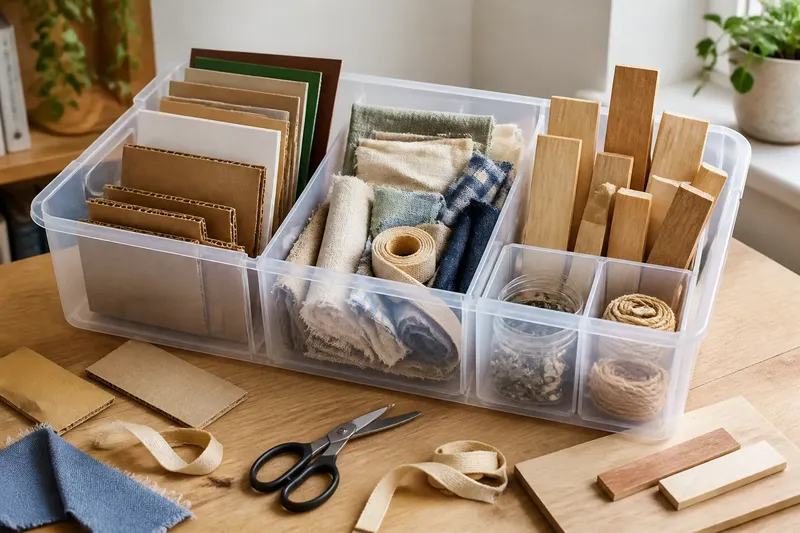
The paper-wrapped parcel arrives, and the scissors leave a neat strip of card on the table. A length of cotton tape is left after mending a cushion; a small piece of plywood remains from a shelf repair. A visible materials box gives these offcuts a place together, where their usefulness can be judged later rather than guessed from memory.
The idea is simple, but the habit depends on a distinction: store material, not the story of the job it came from. Grouping card with card, fabric with fabric and wood with wood makes it easier to see what is available and what each piece might suit. A mixed drawer hides both abundance and limitation.
What makes a materials box useful?
A materials box is a modest, visible holding place for sound leftovers that could plausibly serve another purpose. It might be a shallow tray on a workshop shelf, a lidded crate in a cupboard, or several small containers on a bookcase. The right form is the one that lets household members see what is there without unpacking unrelated things.
“Visible” need not mean displayed in the middle of the room. A clear-fronted box or an open shelf can keep scraps in view while containing them. If the storage is opaque, a simple label on the front should name the material rather than a vague category such as “bits”.
The box is not a verdict that every remainder deserves to be kept. It is a place to pause before disposal, then make a decision based on condition, size and likely use. A torn, damp or contaminated piece is not rescued merely by receiving a container.
Why sort by material rather than by project?
Project-based storage sounds tidy at first: put everything from a curtain repair in one bag, or gather the leftovers from a flat-pack shelf together. But the next use may have nothing to do with the original job. A strip of cotton tape could mend a drawstring, secure a bundle or become part of a craft project. Its material and condition matter more than the occasion that produced it.
Material groups also make comparison easier. With card in one place, a person can judge whether a piece is thick enough for a divider or too small for anything beyond a label. With fabric together, colour, weave and fraying are apparent at a glance. The contents become a small working inventory, not an archive of household projects.
Keep the categories broad enough to be easy to maintain. Paper and card may share a container if the box is dry and the pieces are not bulky; fabrics can be grouped together, with awkward or delicate pieces folded separately. Wood offcuts deserve their own space so that dust and splinters do not mingle with soft materials.
Which offcuts belong in the box?
Keep a piece when it is clean, sound enough for handling and large enough to imagine a use for. That does not mean predicting its exact destination. It means being able to name a plausible role: a card panel for a drawer divider, a fabric square for a patch, a short dowel for a small support.
Set aside scraps that are brittle, mouldy, greasy, heavily frayed or otherwise unsuitable for ordinary reuse. Very small fragments can be useful in some crafts, but a container filled with crumbs is not a useful materials supply. If a piece needs special handling or disposal, follow the relevant product information or local guidance rather than placing it with general making materials.
Say a household has a clean piece of corrugated card left after unpacking a lamp. They trim away a crushed edge, place the sound remainder with other card and leave it visible. Later, when a kitchen drawer needs separating, they can check the piece against the space and decide whether it is suitable; the box has made that assessment possible without promising that every offcut will fit.
How should the groups be arranged?
Choose containers that suit the shape of the materials. Flat paper and card are easier to inspect in a shallow tray or document box than in a deep basket. Fabric benefits from a clean container that does not snag it; wood is often best kept in a sturdy box or on a shelf where pieces cannot slide out.
Use dividers only when they make distinctions clearer. A small paper label can separate card from paper, or cotton from synthetic fabric, if that difference matters to the likely uses in the household. Too many subdivisions turn the box into a filing system with no files to file.
- Paper and card: keep flat pieces together and remove bent or damp scraps.
- Fabric and tape: fold pieces loosely so their size and condition remain visible.
- Wood: group stable pieces by rough form, such as strips and blocks, without mixing them among soft materials.
- Reusable fastenings: keep sound buttons, hooks or short lengths of cord in a small, clearly labelled container.
Place the box near the sort of activity that produces or uses the materials, but not where it obstructs ordinary work. A container tucked behind rarely moved items is technically stored and practically forgotten.
How does a visible materials box become a habit?
The habit begins at the moment a job ends. Before clearing the table, separate the useful remainder from rubbish and return the useful piece to its material group. This is a small closing action, not a second project. If sorting is postponed until a future craft session, the scraps often end up in a carrier bag with a mysterious assortment of unrelated objects.
Make the return easy enough that other people in the household can do it without asking where each item belongs. Labels should use ordinary words, and the containers should be reachable by the people expected to use them. A system understood only by its inventor tends to become a personal collection with visitors.
Once in a while, look through each group and remove pieces that have become damaged or clearly have no plausible use. This is not a demand to invent a project for every scrap. It keeps the box honest: what remains should still be available to inspect, not merely present because it was once saved.
What should you know before setting one up?
Does every leftover deserve to be saved?
No. Keep only pieces that are clean, usable and large enough to handle for a realistic household purpose. Discarding an unsuitable scrap is part of the system, not a failure of imagination.
Should different materials share one box?
They can share an outer box if dividers keep them distinct and the materials do not damage one another. Separate containers are often clearer for dusty wood, delicate fabric and flat paper.
How can you stop the box becoming clutter?
Give each material a defined container and remove damaged or unusable pieces when they turn up. If the lid will not close or the contents cannot be seen, the category needs sorting or a smaller limit.
What if nobody knows whether a piece is useful?
Keep it only if its material and condition can be identified and a plausible use can be named. Otherwise, it is taking up space on the strength of a possibility too vague to guide a decision.
What does the box change about making?
A visible materials box shifts the starting point for small household making. Instead of beginning with a shopping list or a rummage through drawers, someone can first inspect what is already on hand. The choice remains practical: an offcut is suitable only if its size, condition and material fit the task.
It also gives past work a modest afterlife without requiring the household to preserve every trace of it. A useful scrap is no longer an anonymous remainder; it is a material that can be recognised, compared and either chosen or passed over. That is the quiet value of keeping offcuts together: future reuse becomes a decision made with the piece in view.
Keep the box small enough to see into, and specific enough to sort without a discussion. A strip of card on a shelf is not yet a project, but it is a much better starting point than a memory of where the strip might be.